

Looking for a solution to soothe both sensitive skin and scalp?
In addition to its role as a mechanical barrier, the skin is the body's largest sensory organ. It is composed of many receptors and sensory nerve endings, perceiving, and responding to external stimuli. However, for 71% of the adult population, this natural ability of "perception and response" is "hyperactive," leading to what is commonly known as sensitive skin, which is a daily strugglei.
Sensitive skin is characterized by unpleasant sensations such as burning, stinging, tingling, pricking, or itching that occur in response to stimuli that don't usually produce such symptoms, such as exposure to cold, heat, pollution, cosmetics, or moistureii. In addition, people with sensitive skin often experience skin redness, dryness, and flaking, which can worsen their discomfortiii. Numerous studies have now shown that the primary reason behind skin sensitivity and the associated discomfort is the hyperactivation of a specific family of channels, the transient receptor potential channels (TRP), and particularly the TRPV1 channeliv,v.
TRPV1, also known as vanilloid 1 receptor, is a key player in mediating sensations of pain, itch, and warmth, mainly in response to heat or chemical stimuli, such as capsaicin; the active lowers its tolerance threshold, making it more easily activated. When activated, the TRPV1 channel triggers the release of pro‐inflammatory mediators, including IL‐1α, IL-8, and PGE2, leading to itching and burning sensationsvi. Therefore, the repetitive activation of this channel amplifies the perception of unpleasant sensations to external stimuli, while the accumulation of pro-inflammatory mediators leads to skin redness, dryness, and flaking.
In the cosmetic industry, sensitive skin is a major concern as it can restrict the use of various products, especially those that could exacerbate skin sensitivity. In fact, of consumers claiming to have sensitive skin, 78% avoid specific products due to previous experiences of unpleasant sensory effectsvii. Therefore, individuals with sensitive skin are constantly seeking solutions and adapted care. To answer a cosmetic brand's need for an easy-to-use and effective soothing active ingredient that provides consumers with a natural way to reduce skin sensitivity, Lucas Meyer Cosmetics and Southern Cross Botanicals have developed Tazman Pepper™ C, inspired by the Tasmanian pepperberry bush.
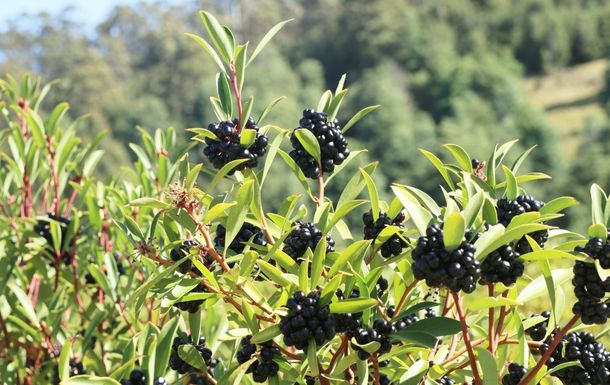
The Tasmanian pepperberry (Tasmannia lanceolata) is endemic to the cool and temperate forests of southeastern Australia and Tasmania. It is named after its pungent and peppery taste and renowned for its numbing effect, both of which are attributed to polygodialviii. Rich in bioactive compounds with antioxidant and anti-inflammatory properties, the leaves hold high value in traditional medicineix.
By using a green extraction process, we harnessed these unique bioactive molecules and created Tazman Pepper™ C, a highly effective solution to soothe and calm sensitive skin. With its remarkable ability to scavenge free radicals and reduce the production of IL-1α, IL-8, and PGE2 by up to 59%, Tazman Pepper™ C effectively inhibits the TRPV1 inflammatory cascade, to help restore the skin's natural state and comfort. Clinically tested on individuals with sensitive skin, Tazman Pepper™ C demonstrated an immediate relief of the skin’s burning sensations by up to 67% after just 1 minute and provided complete relief after 3 minutes. Furthermore, it visibly diminished skin redness by up to 74% in only 30 minutes, making it the perfect solution to tackle all aspects of sensitive skin.

While sensitivity is often encountered on the face, it can also occur on the scalpx. Recent studies showed that the TRPV1 channel can also increase scalp sensitivity to various stimulixi. Considering these new findings and inspired by its already proven soothing efficacy, Tazman Pepper™ C was specifically tested to tackle scalp sensitivity by means of the same mode of action as on the skin and, perhaps, provided a unique soothing effect and improved scalp comfort.
A new innovative way to clinically assess scalp sensitivity
Evaluating the effectiveness of an active ingredient on scalp sensitivity is a complex task, primarily due to its subjective nature, which varies significantly among individualsxii. In addition, the presence of hair on the scalp makes the evaluation process even more complex. Most techniques used to assess scalp sensitivity rely on subjective emotional responses, which are highly variable and unreliable. To overcome this issue and clinically evaluate the soothing effect of Tazman Pepper™ C on the scalp, we used an Electrodermal Response (EDR) technique. This technique is similar to a lie detector and relies on micro-sweating on fingertips - a natural and unconscious response to emotional changes. By analyzing this micro-sweating, it is possible to measure the skin’s conductivity and quantify the body's biological and innate response to discomfort and pain, even before obtaining a subjective emotional response, making it a reliable and robust evaluation method for scalp sensitivity analysis.
By using this technique, Tazman Pepper™ C was clinically proven to significantly reduce scalp discomfort and sensitivity, measured via skin conductance, by up to 42% within just 3 days. A self-assessment was also conducted, and the feedback from the volunteers corroborated the results. Volunteers reported less sensitivity to hair dryers, fewer burning and itching sensations on their scalp, and overall greater scalp comfort, among other benefits.

By its combined action on both skin and scalp, using the same sensitive pathway, Tazman Pepper™ C is the perfect fit for the skinification trend. The scalp is an extension of our skin, and it deserves the same care and attention. With its effective mode of action, Tazman Pepper™ C delivers fast and effective results, making it the ideal active ingredient to reduce sensitivity from head to toe.
Wild-grown and wild-harvested from its native Australian habitat, Tazman Pepper™ C offers complete traceability from field to beauty. With 100% carbon renewable and 100% natural origin content, it complies with Chinese regulations, is NMPA registered, COSMOS approved, and certified vegan by The Vegan Society. Tazman Pepper™ C is also standardized in chlorogenic acid to ensure consistent quality from batch to batch and is free of preservatives and parabens.
i Almeida IF. Usage of Synthetic Peptides in Cosmetics for Sensitive Skin. Pharmaceuticals (Basel). 2021;14(8):702. Published 2021 Jul 21. doi:10.3390/ph14080702
ii Talagas M, Misery L. Role of Keratinocytes in Sensitive Skin. Front Med (Lausanne). 2019;6:108. Published 2019 May 21. doi:10.3389/fmed.2019.00108
iii Misery L, Sibaud V, Ambronati M, Macy G, Boussetta S, Taieb C. Sensitive scalp: does this condition exist? An epidemiological study. Contact Dermatitis. 2008;58(4):234-238. doi:10.1111/j.1600-0536.2007.01288.x
iv Resende DISP, Ferreira MS, Sousa-Lobo JM, Sousa E, Almeida IF. Usage of Synthetic Peptides in Cosmetics for Sensitive Skin. Pharmaceuticals (Basel). 2021;14(8):702. Published 2021 Jul 21. doi:10.3390/ph14080702
v Kueper T., Krohn M., Haustedt L.O., Hatt H., Schmaus G., Vielhaber G. (2010) Inhibition of TRPV1 for the treatment of sensitive skin. Exp Dermatol. Nov:19(11); 980‐986.
vi Homey B., Steinhoff M., Ruzicka T., Leung D.Y.M. (2006) Cytokines and chemokines orchestrate atopic skin inflammation.J. Allergy Clin. Immunol. Jul: 118(1):178‐189.
vii Farage MA. The Prevalence of Sensitive Skin. Front Med (Lausanne). 2019;6:98. Published 2019 May 17. doi:10.3389/fmed.2019.00098
viii Simons CT, Klein AH, Carstens E. Chemogenic Subqualities of Mouthfeel. Chem Senses. 2019;44(5):281-288. doi:10.1093/chemse/bjz016
ix Mani JS, Johnson JB, Hosking H, et al. Antioxidative and therapeutic potential of selected Australian plants: A review. J Ethnopharmacol. 2021;268:113580. doi:10.1016/j.jep.2020.113580
x Saint-Martory C, Roguedas-Contios AM, Sibaud V, Degouy A, Schmitt AM, Misery L. Sensitive skin is not limited to the face. Br J Dermatol. 2008;158(1):130-133. doi:10.1111/j.1365-2133.2007.08280.x
xi Del Fiacco M, Quartu M, Boi M, et al. TRPV1, CGRP and SP in scalp arteries of patients suffering from chronic migraine. J Neurol Neurosurg Psychiatry. 2015;86(4):393-397. doi:10.1136/jnnp-2014-308813
xii Kueper T, Krohn M, Haustedt LO, Hatt H, Schmaus G, Vielhaber G. Inhibition of TRPV1 for the treatment of sensitive skin. Exp Dermatol. 2010;19(11):980-986. doi:10.1111/j.1600-0625.2010.01122.x

